Forests in a Changing World: Balancing Nature, Economic Interests and Security
30.01.2026

Forests, related industries, and access to timber resources have become central issues in both Latvian and European debates in recent years. Forests are no longer viewed solely as a natural asset or a source of raw materials. They are increasingly at the crossroads of political, economic, climatic, and geopolitical decisions. In these circumstances, it is particularly important to speak not with emotions or slogans, but in terms of data, processes, and a long-term perspective.
At a global level, the forest sector and related industries are being shaped by two interrelated factors. The first is Europe’s Green Deal and its land-use policy, which determines how much, where, and what can and cannot be done in forests. The second is the geopolitical reality in which timber resources are increasingly becoming a strategic element of a country’s economic resilience and security. For countries where forestry and the timber industry form an important part of the economy, these issues are particularly sensitive.
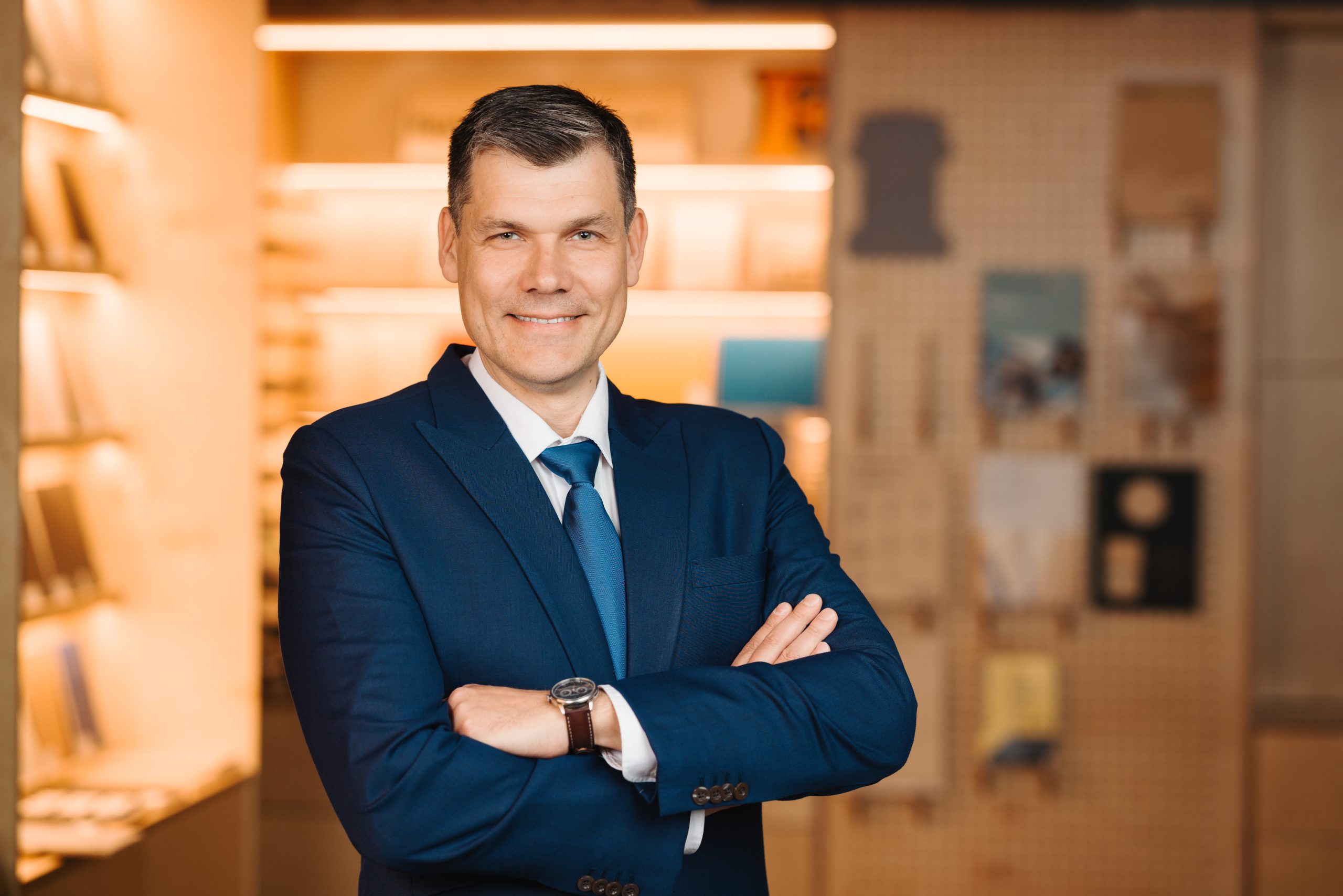
Latvia, like Estonia, Finland and Sweden, is a country whose economic fabric has historically been shaped by forests. The forest sector contributes a substantial share of export earnings, supports tens of thousands of jobs, and underpins a broad value chain of related industries, ranging from logging and logistics to engineering, research and the production of high value-added products. At the same time, this sector requires a very high level of investment with a long payback period. Mills, technologies and human resources are not developed on a five-year horizon, but through decisions taken over 20, 30 or even more years. This is why stability and predictability in the availability of resources are critical.
One of the biggest challenges today is uncertainty. If businesses do not see a clear national strategy and a well-defined policy on the role of forestry in ten or fifteen years’ time, investment decisions tend to become more cautious. Uncertainty acts as a brake on modernisation, innovation and competitiveness, particularly in a sector where decisions are highly capital-intensive. Sustainable forestry cannot be built on short-term political signals; it requires a stable and predictable framework.
The sustainability debate often pits two opposing extremes against each other: the view that forests are over-exploited, and, conversely, that economic activity is unduly restricted. However, the evidence shows that Latvia’s forest area and total timber growing stock are not declining over the long term. A forest is a dynamic system, not a static “frozen” asset. The question is not whether forests should be used, but how to do so wisely, professionally, and with a long-term perspective.
Active, sustainable forestry means nurturing, restoring and managing forests in a responsible and sustainable manner. An unmanaged forest does not necessarily have greater biological value, just as economic activity does not automatically result in degradation. Sustainability in practice lies in balancing conservation with responsible human activity, and protection with use.
Carbon cycling is an important but often simplistically interpreted aspect. Wood, as a material, allows carbon to be stored over the long term in buildings, structures, furniture and industrial products. These products can last for decades or even centuries, and their life cycle often does not end with their initial use; wood can be recycled, thereby extending the period of carbon sequestration. The alternative is often to leave wood to rot in forests or to burn it without adding value, returning carbon to the atmosphere far more quickly. Climate targets cannot be achieved by ignoring the potential of wood.
In a geopolitical context, timber resources also take on a security dimension. An economically strong country can sustain its social systems, invest in education and science, and at the same time ensure its defence. In this respect, sectors that generate stable export earnings and employment are of strategic importance. The forest sector is one of the pillars on which this security rests.
At the same time, there is often a lack of a shared, data-driven understanding of the forest sector in the public sphere. Statistics on production, exports and economic contribution are available, but data on protection regimes, restrictions and their cumulative effects are often fragmented. Without a common factual basis, the discussion easily becomes emotional and polarised. This is why the state has an important moderating role in the process: to provide clear, accessible information and to create space for informed and reasoned debate.
Dialogue is the biggest challenge of the future. Respectful dialogue and alignment between industry, policymakers and the public must be grounded in data, mutual respect and an understanding of differing interests. People working in the forest sector are not enemies of nature. They work every day with processes that extend beyond a single generation, because sustainability in forestry is not a buzzword or a political label, but a practical necessity.
The key word in this discussion is balance. Balancing nature conservation with economic activity, climate objectives with economic realities, and short-term political decisions with long-term development. If this balance can be maintained, timber resources will continue to be one of Latvia’s key sources of competitiveness and resilience in a changing world.
Artis Podnieks, Member of the Executive Board of AS Latvijas Finieris